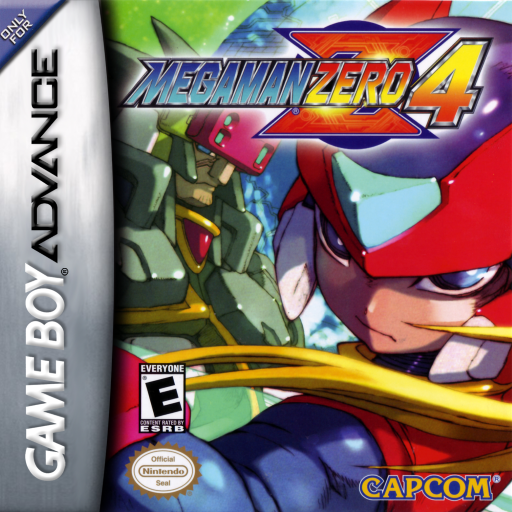
Inti Creates' 2005 GBA action-platformer and the final chapter of Zero's story — Mega Man Zero 4 concludes Zero's four-game narrative arc with Dr. Weil's satellite cannon threatening Area Zero, introduces the EX Skill weather system where environmental conditions affect which abilities are available, and delivers a bittersweet ending that resolved the Zero series' long-running human-Reploid conflict.
Best Classic Platformer Games
The complete collection of 165 vintage platformer games — with full reviews, cheat codes, and trivia.
Platformer Games — Page 3
Sorted by ratingThe rarest and most beloved GBA action game, Ninja Five-O is a supremely polished ninja platformer where Joe Osugi uses grappling hooks, shurikens, and sword attacks to save hostages from terrorists. Limited production run made it one of the most valuable GBA cartridges; the gameplay earns every cent of its collector price.
The best Ninja Gaiden on NES — Ryu Hayabusa's second outing introduces shadow clones, longer stages, and better cutscene storytelling in a game considered by many to surpass the acclaimed original.
Ryu Hayabusa's first mission introduced cinematic storytelling to the NES with anime-style cutscenes, while delivering punishingly precise action-platformer gameplay that tested every ninja's patience.
Oddworld Inhabitants' 1998 PS1 sequel to Abe's Oddysee — Abe's Exoddus expands the Mudokon rescue formula with more GameSpeak commands, possession of new creature types, a "quick save" system replacing the limited lives of the original, and 300 Mudokons to rescue across more stages than the first game.
Jordan Mechner's 1989 Apple II classic on SNES — Prince of Persia follows an unnamed prisoner escaping the Grand Vizier Jaffar's dungeons to save the Princess in 60 minutes of game time, with rotoscoped animation creating realistic human movement and sword combat demanding careful guard engagement. One of the defining games of the early 1990s.
Konami's 1994 SNES sequel to Rocket Knight Adventures — Sparkster follows the opossum knight with his rocket pack across eight stages, with the charge-and-release rocket boost mechanic returning and refined. A direct sequel that improves on its already excellent predecessor with tighter stage design and enhanced rocket pack moments.
Insomniac's refinement of Spyro the Dragon — 30 levels with unique characters, expanded abilities (swimming, headbash, climbing), NPCs with voiced quests, and greater world variety than the original.
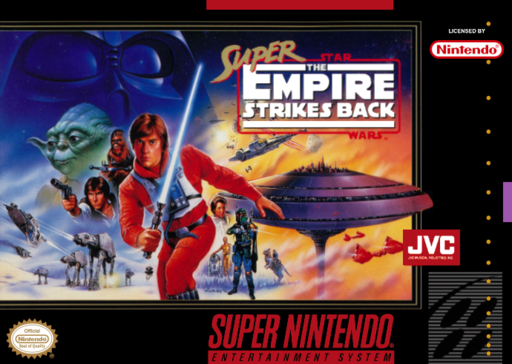
JVC's 1993 SNES action-platformer and the middle entry of the Super Star Wars trilogy — Super Star Wars: The Empire Strikes Back adapts Episode V with Luke's Force training on Dagobah, the Battle of Hoth with AT-AT walkers, Cloud City's lightsaber duel, and introduces the Force ability upgrade system where Luke learns new Force powers through gameplay progression.
The legendary SNES sequel to Ghosts 'n Goblins and Ghouls 'n Ghosts is one of the most beautifully crafted and mercilessly difficult platformers ever made. Arthur returns to fight demons across seven nightmarish stages in a game that demands precise play, patient learning, and multiple full completions just to see the true ending.
The definitive handheld Super Mario World — Super Mario Advance 2 ports the SNES classic to GBA with Luigi as a fully playable separate character (distinct moveset rather than a palette swap), Yoshi available from World 1, and voice clips for Mario and Luigi throughout, delivering the complete SMW experience in portable form.
Nintendo's SNES anthology of remade NES Mario classics — Super Mario All-Stars updates Super Mario Bros., Super Mario Bros. 2, Super Mario Bros. 3, and The Lost Levels with 16-bit graphics and saves.
Super Mario Bros. Deluxe for GBC included the complete original NES game plus Super Mario Bros: For Super Players (the Japanese Lost Levels) in portable form. The added Challenge mode, collectible Red Coins and Yoshi Eggs, and Boo Race competitive ghost features made it the definitive portable Mario experience of the era.
The Game Boy masterpiece that introduced Wario to the world. Super Mario Land 2 massively expanded on its predecessor with a large overworld, six distinct zones, and the Bunny Ears and Carrot power-up that let Mario float. The final showdown with Wario in Mario's own castle is one of gaming's great villain reveals.
Whoopee Camp's overlooked 1998 PS1 platformer that blends action-adventure with mission-based exploration — Tomba! is one of gaming's most beloved hidden gems and one of the rarest and most expensive PS1 games in the secondary market. A feral boy rescuing pigs from Evil Pigs through connected world exploration that predates the 'Metroidvania' vocabulary.
The GBA launch title that cemented Wario Land as one of Nintendo's most inventive platformer series. Wario crashes his car into a pyramid, fights through four themed worlds, and must escape each level before time runs out after finding the golden passage. Bizarre enemies, inventive transformations, and an unforgettable soundtrack make this the high point of the Wario Land series.
The only mainline Castlevania on Genesis — Bloodlines introduces two playable protagonists (John Morris and Eric Lecarde) and a globe-trotting adventure through six European countries in a darker, more violent Castlevania than its SNES counterparts.
The GBA launch Castlevania that brought the Symphony of the Night formula to handheld — Circle of the Moon introduced the DSS card combo system and proved the Metroidvania formula translated perfectly to portable play.
Abe is a Mudokon slave working at RuptureFarms who discovers that his kind are the next product on the menu. His attempt to escape and liberate his enslaved people turns a dark industrial satire into one of the most original platformers of the PS1 era — with GameSpeak letting Abe possess enemies and command fellow Mudokons.
The Genesis launch era classic that established the 16-bit action-platformer standard. As ninja Joe Musashi, players fight through eight worlds of enemies to rescue a kidnapped fiancée, using shurikens, magic, and fluid platforming across some of the most memorable stages of the early Genesis library. Revenge of Shinobi remains one of the most important early Genesis games and one of the series' finest entries.
WayForward's half-genie hero arrived in 2002 — a year after the Game Boy Advance had replaced the Game Boy Color — making it one of the most technically accomplished and rarest GBC games. Shantae uses belly-dancing transformation magic across a connected world of villages and dungeons, combining Arabian Nights aesthetics with Metroidvania-style exploration in one of the handheld era's great hidden gems.
Insomniac Games' gem-collecting adventure placed players in the wings of a young purple dragon exploring vast, colorful worlds. Spyro the Dragon's open, exploratory design and warm personality made it an instant PlayStation classic and launched one of gaming's most beloved franchises.
Westone's action-RPG masterpiece on Sega Genesis, often cited as a hidden gem of the 16-bit era. Shion navigates a world of diverse towns, dungeons, and monster territories, collecting equipment and spells while the game seamlessly blends platformer mechanics with RPG character development. One of the strongest arguments for the Genesis's action-RPG library alongside Landstalker and Beyond Oasis.
The first game to require the DualShock analog sticks — Ape Escape's 204-monkey catching adventure across 26 stages used every feature of Sony's then-new controller in creative ways.