The first Sonic game developed for a Nintendo platform, Sonic Advance brought the blue blur to Game Boy Advance in 2001 with a return to 2D side-scrolling gameplay. Four playable characters (Sonic, Tails, Knuckles, Amy), seven zones with multiple acts each, and tight responsive controls made it the best Sonic game since the Genesis era for many players.
Sega Games
92 classic games published by Sega.
Sonic Team's frantic multiplayer puzzle game where players place directional arrows to guide mice (ChuChu) into rockets while deflecting space cats (KapuKapu) toward opponents. ChuChu Rocket! was the first online multiplayer game on a home console and one of the most chaotic and enjoyable party games of the Dreamcast era.
Treasure's creative Genesis platformer where protagonist Heady throws his detachable head to attack, solve puzzles, or swap with special heads granting unique powers. Dynamite Heady's constant mechanic variation, inventive level designs, and technical achievement make it one of the Genesis's most creative and underrated games.
The arcade sequel that improved on Golden Axe in every dimension — four-player simultaneous play, larger sprites, more varied enemy types, and rideable creatures with unique attacks. Golden Axe: The Revenge of Death Adder was arcade-only in most regions, making it one of the great hidden gems in the Golden Axe franchise.
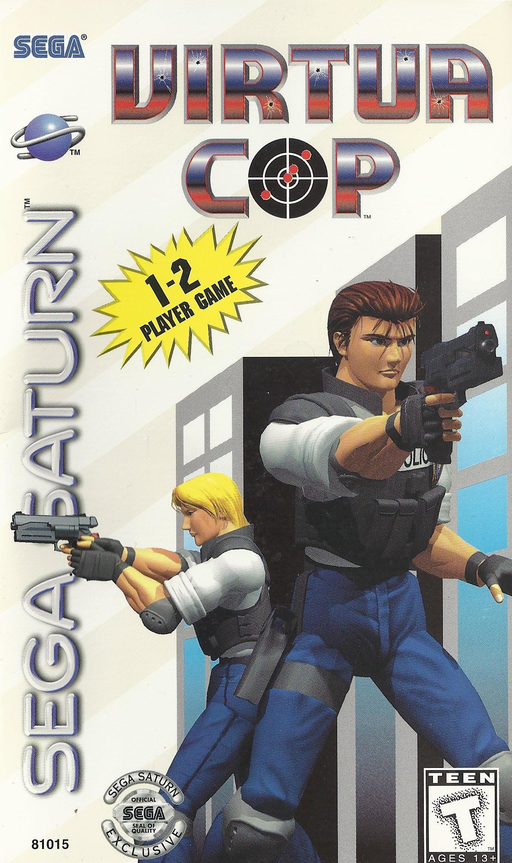
Sega AM2's 1994 arcade light-gun game ported to Saturn — Virtua Cop pioneered 3D polygonal graphics in the light-gun genre, replaced the sprite-based graphics of Operation Wolf and Area 51 with fully 3D environments and enemy models, introduced accuracy scoring and the distinction between hostage and criminal targets, and established the template for all subsequent 3D police-themed shooters.
Sega's Master System port of Falcom's classic action-RPG — Ys: The Vanished Omens brings the story of Adol Christin and the lost land of Ys to home console with the series' distinctive bump combat system, six Books of Ys to collect, and the iconic orchestral soundtrack. An excellent SMS version of one of Japan's most beloved RPG franchises.
Sega's colorful side-scrolling space shooter starring Opa-Opa, the sentient spaceship with adorable sneakers. Fantasy Zone's shop system — where players spend coins collected from defeated enemies on speed upgrades, bombs, and weapon enhancements — was a novel mechanic that set it apart from every other shooter of the era.
Sega's Master System action-RPG set in the Golden Axe universe — Golden Axe Warrior takes the franchise's fantasy setting into a Zelda-style overhead adventure with dungeons, magic axes, and a quest to recover nine crystal shards from Death Adder's dungeons. An underrated SMS exclusive that delivered Zelda-caliber exploration to Sega's home console.
The Genesis game that invented the real-time strategy genre. Herzog Zwei's top-down combat — controlling a transforming mech to capture bases while commanding AI troops — directly inspired Dune II, Command & Conquer, and Warcraft. The first true RTS ever made remains entertaining and strategically demanding decades later.
The light-gun arcade shooter that became the Dreamcast's best peripheral showcase. House of the Dead 2's branching narrative paths, cooperative two-player zombie-blasting, and gloriously cheesy voiced cutscenes — 'Goldman! Suffer like G did?' became gaming's most quoted bad dialogue — made it essential for Dreamcast party sessions.
Sega AM7's breathtaking Saturn launch title drops players onto the back of a blue dragon soaring through a hauntingly beautiful post-apocalyptic world inspired by the artwork of Jean Giraud, delivering on-rails shooter gameplay with a 360-degree lock-on targeting system unlike anything seen before. Panzer Dragoon's atmospheric world-building, fluid dragon movement, and unforgettable boss encounters established an original franchise that remains one of Sega's most artistically distinctive achievements.
Sega's late-era Genesis gem — Ristar grabs and headbutts enemies using his extendable arms across six colorful planets, delivering some of the best visuals and music the Genesis hardware ever produced in a sadly overlooked platformer.
Sonic's first fully realized 3D platformer and the Dreamcast's defining launch title brought six playable characters — each with distinct gameplay styles — a sprawling adventure hub world, and the Chao Garden life-simulation system into what became the most content-rich Sonic game ever released. Sonic Team's ambition occasionally outpaced the hardware's capabilities, but the sheer energy of the speed stages and the scope of the game's construction left an impression that defined what 3D Sonic could aspire to be.
The original Streets of Rage — Axel, Blaze, and Adam fight through a crime-ridden city in the Genesis beat-em-up that introduced Yuzo Koshiro's legendary score and established Sega's most beloved brawler franchise.
The final Genesis Streets of Rage built on Streets of Rage 2's foundation with a darker story, faster gameplay, special moves tied to health management, and a more complex combat system. While divisive on release due to its difficulty compared to SoR2, Streets of Rage 3 has grown in reputation as a mechanically deep action game.
Sega's technical showpiece for the late Genesis era — a CGI-rendered protagonist fighting robot hordes with fluid animation that demonstrated the Genesis could compete visually with the incoming 32-bit generation.
Ancient's Saturn-exclusive action RPG sequel to Beyond Oasis — Leon controls six elemental spirit companions who provide combat assistance, puzzle solutions, and traversal abilities as he uncovers the story in an Arabian Nights setting. The Legend of Oasis pushed Saturn's 2D sprite capabilities to showcase what the hardware could do for the genre.
Compile's Sega CD vertical shoot-em-up set in feudal Japan — Robo Aleste (Dennin-Aleste in Japan) puts players in control of a mechanical samurai mech battling through samurai-era enemies using scrolls (weapon power-ups) collected during combat. A visually distinctive shmup that uses the CD format for voiced anime cutscenes and CD audio while delivering Compile's signature weapon variety gameplay.
Sega's classic ninja action game on Master System — Shinobi puts players in control of Joe Musashi, a ninja infiltrating enemy compounds to rescue kidnapped children and defeat the criminal organization Zeed. The SMS version captures the arcade's side-scrolling action with throwing stars, swords, and ninja magic.
Tetsuya Mizuguchi's Dreamcast rhythm game about news reporter Ulala defeating alien invaders through dance battles — a visually spectacular '60s space-age aesthetic with a rhythm-game call-and-response mechanic and Michael Jackson making an actual cameo. Space Channel 5 is one of the defining examples of games as pure style.
Sega AM2's Dreamcast port of Virtua Fighter 3 — featuring the dodge button and uneven terrain stages that made VF3 controversial in arcades, and the complete 11-character roster including new additions Taka-Arashi (sumo) and Aoi (aikido). The Dreamcast's launch title fighting game and one of the most authentic arcade-to-home conversions of its era.
The Donald Duck Genesis platformer that surprised players with its polish and non-linear world design. QuackShot: Starring Donald Duck sent players across six global locations in any order, using plungers and super balls to traverse different environments. One of the best Disney licensed games of the 16-bit era.
Widely considered the best original Game Gear Sonic experience. Triple Trouble's varied level designs, playable Knuckles echidna with unique routes, and polished animation made it the standout title in Sega's portable Sonic lineup. The search for six Chaos Emeralds drives an adventure that holds up decades later.
Westone's action-RPG hybrid that evolved Wonder Boy's pure platforming into an adventure with shops, equipment upgrades, and dragon combat — Wonder Boy in Monster Land is the SMS sequel that transformed the franchise's formula, adding RPG elements to platform action and establishing the character-progression template the series would develop through Monster World IV.