Fighting 56 games

Best Classic Fighting Games

The complete collection of 56 vintage fighting games — with full reviews, cheat codes, and trivia.

Fighting Games — Page 2

Sorted by rating
🟣
Dragon Ball Z: Hyper Dimension
1996
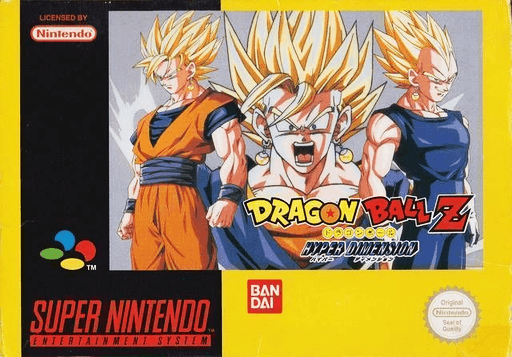
Dragon Ball Z: Hyper Dimension box art
SNES
8.8
1996 · TOSE

Bandai's 1996 SNES one-on-one fighting game and the final DBZ game on Super Nintendo — Dragon Ball Z: Hyper Dimension features large character sprites pushing SNES hardware limits, aerial combat with characters that can fly across the stage, ki charging system for super attacks, Story Mode following the Cell and Buu sagas, and is considered the finest 2D Dragon Ball Z fighting game of its era.

Marvel Super Heroes
1996
Marvel Super Heroes box art
PLAYSTATION
8.8
1996 · Capcom

Capcom's 1996 PS1 Marvel fighting game sequel to X-Men: Children of the Atom — Marvel Super Heroes expands the roster beyond the X-Men to include Spider-Man, Iron Man, Captain America, and the Hulk, introduces the Infinity Gem power-up system based on Jim Starlin's Infinity Gauntlet storyline, and advances the aerial combo mechanics of its predecessor.

Rival Schools: United by Fate
1998
Rival Schools: United by Fate box art
PLAYSTATION
8.8
1998 · Capcom

Capcom's 1998 PS1 3D fighting game — Rival Schools follows students from competing high schools after mysterious faculty kidnappings, with a 3D arena fighting system emphasizing team assist mechanics and the Party Up feature where two characters can combine for powerful joint attacks. A unique visual style and assist system distinguish it from Capcom's Street Fighter contemporaries.

Tekken 2
1996
Tekken 2 box art
PLAYSTATION
8.8
1996 · Namco

The PlayStation fighter that cemented Tekken's dominance — Tekken 2 doubled the roster to 25 characters, introduced Arcade Mode endings with anime cutscenes, and refined the 3D fighting system that would define the genre on PS1.

🕹️
Fatal Fury Special
1993
Fatal Fury Special box art
NEO-GEO
8.7
1993 · SNK

The definitive version of SNK's original fighting franchise, combining the best characters from Fatal Fury 1 and 2 with three secret bosses and refined mechanics. Fatal Fury Special's line system — allowing players to dodge into a background plane — and its distinctive South Town setting built the competitive infrastructure that the King of Fighters series would inherit.

🕹️
The King of Fighters '95
1995
The King of Fighters '95 box art
NEO-GEO
8.7
1995 · SNK

SNK's 1995 Neo Geo fighting game sequel and the refinement that made KOF the franchise — The King of Fighters '95 introduces fully customizable team selection (replacing '94's fixed pre-set teams), adds Iori Yagami as Kyo's rivalry foil, introduces Rugal Bernstein's powered-up form as Omega Rugal, and delivers the series' first memorable story arc beat with the Orochi storyline's early seeds.

🕹️
The King of Fighters '96
1996
The King of Fighters '96 box art
NEO-GEO
8.7
1996 · SNK

SNK's 1996 Neo-Geo fighting game and the pivotal King of Fighters entry that overhauled the series mechanics — KOF '96 replaced the Rush Combo system with Tactical Order Shifting, introduced the new Orochi Saga storyline that would dominate the series through KOF '98, and refined the three-on-three team format with more arcade-precise controls.

Soul Blade
1996
Soul Blade box art
PLAYSTATION
8.7
1996 · Project Soul

The PS1 predecessor to Soulcalibur that introduced weapon-based 3D fighting to PlayStation owners. Soul Blade's Edge Master Mode was an early story-driven fighting game experience that gave each character distinct narrative chapters, and the weapon degradation system added strategic tension to every fight. Released as Soul Edge in Japan.

🕹️
Art of Fighting 2
1994
Art of Fighting 2 box art
NEO-GEO
8.6
1994 · SNK

SNK's 1994 Neo Geo sequel and the definitive Art of Fighting experience — Art of Fighting 2 dramatically expands the roster to 12 characters (from 2+2 boss-only in AOF1), adds Robert Garcia, Yuri Sakazaki, and King as fully playable alongside refined special move systems, improves the Spirit Gauge balance, and develops the franchise's story connecting to Fatal Fury's timeline.

🕹️
The King of Fighters 2000
2000
The King of Fighters 2000 box art
NEO-GEO
8.6
2000 · SNK

SNK's 2000 Neo Geo fighting game and the second chapter of the NESTS Chronicles — The King of Fighters 2000 expands the Striker System to two Strikers per team (from KOF '99's one), features the largest KOF roster to that point, introduces Ramon and Vanessa as new characters, continues the K' and NESTS story arc, and runs on the powerful NESTS team with expanded boss encounters.

X-Men: Children of the Atom
1995
X-Men: Children of the Atom box art
PLAYSTATION
8.6
1995 · Capcom

Capcom's 1995 PS1 Marvel fighting game and the beginning of Capcom's Marvel partnership — X-Men: Children of the Atom introduces the hyper super combo system, aerial combos via super jumps, and a 10-character roster (Wolverine, Cyclops, Psylocke, Storm, Iceman, Colossus, Spiral, Omega Red, Silver Samurai, Magneto) that launched one of gaming's most beloved crossover fighting game franchises.

🟣
Killer Instinct
1995
Killer Instinct box art
SNES
8.5
1995 · Rare

Rare's technically audacious port of the arcade fighter brings pre-rendered 3D character graphics and the signature Combo Breaker system to the SNES in a package that defied expectations for what 16-bit hardware could deliver. The game's roster of outlandish fighters — skeleton warriors, cyborgs, and a two-ton dinosaur — and its lengthy auto-combo chains gave it a distinct identity that set it apart from Street Fighter and Mortal Kombat contemporaries.

🕹️
The King of Fighters '99: Millennium Battle
1999
The King of Fighters '99: Millennium Battle box art
NEO-GEO
8.5
1999 · SNK

SNK's 1999 Neo Geo fighting game and the transition entry that introduced the Striker System — The King of Fighters '99 adds a fourth team member as an Assist Striker (a character called in for a single attack), introduces K' (Kay Dash) as the series' new protagonist replacing Kyo Kusanagi, and begins the NESTS Chronicles story arc that would run through KOF 2001.

🕹️
Power Stone
1999
Power Stone box art
DREAMCAST
8.5
1999 · Capcom

Capcom's arena fighter built around collecting three Power Stones to trigger dramatic mid-fight character transformations — shifting the entire power dynamic in seconds — across dynamic 3D arenas with destructible environments and item-based combat that were meaningfully ahead of their time. Power Stone's accessible controls masked genuine mechanical depth, and its design philosophy of environmental interaction as a combat resource would take the broader fighting game genre another decade to fully absorb.

🕹️
Killer Instinct Gold
1996
Killer Instinct Gold box art
NINTENDO-64
8.4
1996 · Rare

Rare's port of Killer Instinct 2 to Nintendo 64, delivering the full arcade combo system to home consoles in 1996. With its distinctive roster of supernatural and mythological fighters, the Auto Doubles and manual combo system, and the series' trademark announcer calling each Ultra Combo, KI Gold was the fighting game showcase for early N64 owners.

🕹️
Virtua Fighter 3tb
1998
Virtua Fighter 3tb box art
DREAMCAST
8.4
1998 · Sega AM2

Sega AM2's Dreamcast port of Virtua Fighter 3 — featuring the dodge button and uneven terrain stages that made VF3 controversial in arcades, and the complete 11-character roster including new additions Taka-Arashi (sumo) and Aoi (aikido). The Dreamcast's launch title fighting game and one of the most authentic arcade-to-home conversions of its era.

🕹️
The King of Fighters 2001
2001
The King of Fighters 2001 box art
NEO-GEO
8.3
2001 · Eolith

SNK and Eolith's 2001 Neo Geo fighting game and the conclusion of the NESTS Chronicles — The King of Fighters 2001 features the largest roster in the classic series, concludes the K' and NESTS story arc, offers four Strikers per team (from one in KOF '99), and represents the transition year when SNK faced financial crisis, making it both a franchise milestone and a historical document of a company in difficulty.

🟣
Mortal Kombat 3
1995
Mortal Kombat 3 box art
SNES
8.3
1995 · Sculptured Software

The controversial third MK brought a new armageddon story, run button, and combo system while controversially removing fan-favorites like Scorpion. The SNES version featured the updated Ultimate Mortal Kombat 3 content with the complete roster — making it the most complete home version available before 32-bit hardware arrived.

🟣
Samurai Shodown
1994
Samurai Shodown box art
SNES
8.3
1994 · SNK

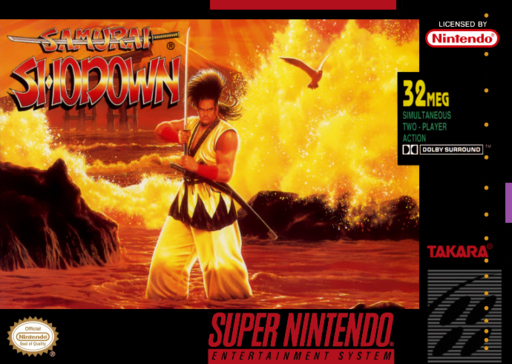
SNK's 1994 SNES port of the Neo Geo weapons-based fighting classic — Samurai Shodown brings the feudal Japan samurai fighter to SNES with 12 characters including Haohmaru, Nakoruru, and Earthquake, the weapon clash and disarm mechanics, rage mode that powers up attacks when health is low, and the game's characteristic one-hit-kill potential that distinguished it from contemporaries.