Capcom's 1993 Genesis port of Street Fighter II Turbo and the competing platform answer to the SNES version — Street Fighter II' Special Champion Edition includes all eight original fighters plus four boss characters as playable, eight-button controller support, Champion Edition and Hyper Fighting modes, and blood that the SNES version removed, triggering one of the era's most active console debate campaigns.
Games Like Primal Rage
12 games similar to Primal Rage — handpicked for fans of Fighting games.
Top Games Similar to Primal Rage
| Feature | Platform | Year | Score | Genre |
|---|---|---|---|---|
| Street Fighter II': Special Champion Edition | SEGA-GENESIS | 1993 | 8.9 | Action, Fighting |
| Art of Fighting 2 | NEO-GEO | 1994 | 8.6 | Action, Fighting |
| Art of Fighting | NEO-GEO | 1992 | 8.2 | Fighting |
| Bushido Blade | PLAYSTATION | 1997 | 8.8 | Fighting |
| Darkstalkers: The Night Warriors | PLAYSTATION | 1995 | 8.7 | Fighting |
| Dead or Alive 2 | DREAMCAST | 2000 | 8.8 | Fighting |
All 12 Games Like Primal Rage
SNK's 1994 Neo Geo sequel and the definitive Art of Fighting experience — Art of Fighting 2 dramatically expands the roster to 12 characters (from 2+2 boss-only in AOF1), adds Robert Garcia, Yuri Sakazaki, and King as fully playable alongside refined special move systems, improves the Spirit Gauge balance, and develops the franchise's story connecting to Fatal Fury's timeline.
The Neo-Geo fighter that introduced the spirit gauge, zoom camera, and desperation moves to the genre. Art of Fighting's distinctive power-dependent gameplay created a different strategic rhythm from Street Fighter II, and its characters would later cross over into King of Fighters.
Light Weight and Square's 1997 PS1 sword-fighting game that rejected health bars entirely — Bushido Blade uses a realistic limb damage system where strikes to the body can kill or disable in one hit. A unique, contemplative fighting game about the geometry of sword combat rather than combo execution, set in feudal Japanese environments with freedom of movement.
Capcom's 1995 PS1 fighting game — Darkstalkers: The Night Warriors presents a roster of supernatural creatures (Morrigan the succubus, Felicia the catgirl, Jon Talbain the werewolf, Demitri the vampire) with fluid animation and specialized special moves. The franchise that pioneered fighting game animation quality and gave Capcom its darkest 2D fighter.
Team Ninja's 3D fighting game with a counter-system that rewards defensive timing and multi-level stage environments where fighters can be knocked across floors and through breakable structures. Dead or Alive 2 on Dreamcast delivered the arcade experience with the series' defining gameplay mechanics and exceptional 3D presentation.
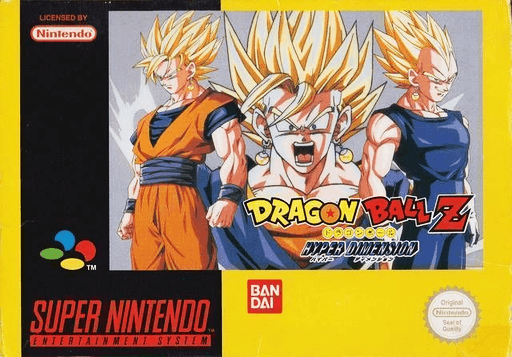
Bandai's 1996 SNES one-on-one fighting game and the final DBZ game on Super Nintendo — Dragon Ball Z: Hyper Dimension features large character sprites pushing SNES hardware limits, aerial combat with characters that can fly across the stage, ki charging system for super attacks, Story Mode following the Cell and Buu sagas, and is considered the finest 2D Dragon Ball Z fighting game of its era.
Bandai and TOSE's 1993 SNES fighting game based on the Dragon Ball Z Android and Cell arcs — Dragon Ball Z: Super Butōden 2 features 13 playable characters including Future Trunks, Android 18, Android 17, Piccolo, and Cell, with the series' signature energy-based combat and Super Saiyan transformations.
Sega's ambitious Sega CD fighting game sequel — Eternal Champions: Challenge from the Dark Side expands the original Genesis game's warrior-from-history concept with over 20 characters, stage-specific interactive hazards, elaborate fatality systems (Overkills, Vendetta moves, Sudden Death), and CD audio. A technically impressive fighter that pushed what a 2D fighting game could contain.
The definitive version of SNK's original fighting franchise, combining the best characters from Fatal Fury 1 and 2 with three secret bosses and refined mechanics. Fatal Fury Special's line system — allowing players to dodge into a background plane — and its distinctive South Town setting built the competitive infrastructure that the King of Fighters series would inherit.
SNK's final Neo-Geo fighting game and widely considered the greatest game the hardware ever produced. Garou: Mark of the Wolves refined fifteen years of SNK fighting game expertise into a near-perfect competitive experience — the Just Defend mechanic, T.O.P. system, and rock-solid balance make it a timeless competitive classic.
Rare's port of Killer Instinct 2 to Nintendo 64, delivering the full arcade combo system to home consoles in 1996. With its distinctive roster of supernatural and mythological fighters, the Auto Doubles and manual combo system, and the series' trademark announcer calling each Ultra Combo, KI Gold was the fighting game showcase for early N64 owners.