🟦
Mega Man Zero 3
2004
.png)
GAME-BOY-ADVANCE
9.2
By Console Codex Editorial Team · 6 min read ·
Expert-ranked list of the greatest best mega man zero games of all time — with reviews, ratings, and guides for every game.
Inti Creates' 2004 GBA action-platformer and the peak of the Mega Man Zero series — Mega Man Zero 3 refines the Z-Saber combat, introduces Cyber Elf fusion bonuses, expands the boss roster with the Dark Elf storyline, and is widely considered the most mechanically complete Zero series entry before the fourth game's conclusion.
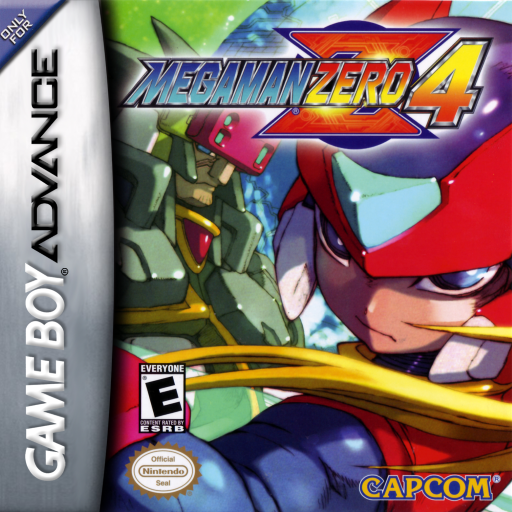
Inti Creates' 2005 GBA action-platformer and the final chapter of Zero's story — Mega Man Zero 4 concludes Zero's four-game narrative arc with Dr. Weil's satellite cannon threatening Area Zero, introduces the EX Skill weather system where environmental conditions affect which abilities are available, and delivers a bittersweet ending that resolved the Zero series' long-running human-Reploid conflict.
Inti Creates sharpens the already-demanding Zero series with an EX Skill system that rewards high-rank mission performance with devastating new techniques, making Mega Man Zero 2 both more accessible and more rewarding for skilled players than its predecessor. The Cyber-Elf customization system, elemental chip weapons, and relentlessly challenging stage design push GBA hardware and player reflexes to their limits in the finest entry of the sub-series.
The darkest Mega Man game — Zero wakes from cryo-sleep to find a dystopian future where humans and Reploids are at war, with brutal difficulty, a ranking system, and a narrative that treats its characters with unusual gravitas.
The Mega Man Zero series took the franchise’s action-platformer foundation and rebuilt it around a character whose defining quality was competence under pressure. Zero — previously a supporting character and rival to X in the Mega Man X series — became a protagonist defined by precision combat: a Z-Saber that required close-range engagement against ranged enemies, elemental chips that modified combat capabilities, a ranking system that rewarded clean play, and a storyline that treated its audience as capable of processing dark material.
Inti Creates developed all four Zero games for GBA between 2002 and 2005, producing a complete four-game arc that concluded Zero’s story with deliberate finality. The series was mechanically demanding, narratively serious, and visually accomplished beyond what GBA players expected from licensed game entries. The Mega Man Zero series is the best four-game run in GBA history.
Mega Man Zero 3 (GBA, 2004) is the finest entry in the series and the game that perfected what the first two established. The difficulty, which bordered on punishing in the earlier entries, was calibrated here with precision — still demanding, requiring genuine skill, but rewarding rather than frustrating in its challenge.
The Cyber Elf system reached its best form: three categories of Elf (Hacker, Animal, Nurse) each providing distinct upgrades, their acquisition integrated into the mission structure without requiring the sacrificial choices that made the second game’s Elf mechanics feel extractive. The boss roster expanded with Omega — Zero’s original body, deployed against him by the series’ primary antagonist — providing the series’ most visually and mechanically impressive boss encounter.
The narrative expanded the series’ mythology most effectively here: Dr. Weil’s history and the Elf Wars backstory gave the post-apocalyptic world context that the first two games gestured toward without fully developing. Zero 3 is the entry where the series’ ambitions and execution were perfectly aligned.
Mega Man Zero 4 (GBA, 2005) concluded the series with a deliberate emotional structure — Zero’s final fight, the resolution of his relationship with Ciel, the end of Dr. Weil. The EX Skills tied to weather conditions were the mechanical innovation, providing context-sensitive abilities rather than static elemental chip loadouts.
The ending is the reason Zero 4 matters. It is one of the few game endings in the franchise’s history that felt genuinely earned rather than formulaic — a conclusion that understood what the series had been building across four entries and paid it off without hedging. Players who completed the Zero series felt the finale as an actual conclusion, not a setup for a sequel.
Zero 4 is slightly easier than Zero 3, which divided players who wanted the series to maintain its challenge through the finale. As a standalone game it’s excellent; as the conclusion to a four-game arc, it’s essential.
Mega Man Zero 2 (GBA, 2003) addressed the original’s balance issues while adding complexity. The Forms system — Zero gaining new combat forms based on how the player engaged in combat during missions — created meaningful progression that the original’s Cyber Elf system hadn’t quite achieved. Playing aggressively developed different forms than playing defensively; the system rewarded specific playstyle commitment.
The difficulty was still severe, and the Cyber Elf sacrifice mechanic — using powerful Elfs cost ranking points — created tension between power and score that not all players found satisfying. But the mission structure improved, the boss roster expanded, and the narrative deepened the COPY X storyline into something more interesting than the first game’s setup suggested.
Zero 2 is the bridge game: better than what came before it, less refined than what followed, essential for the continuity of the series’ best entries.
The original Mega Man Zero (GBA, 2002) established every element the series would build on: the Z-Saber close-range combat, the Cyber Elf upgrade system, the S/A/B/C rank mission evaluation, the harsh future setting, Ciel as the resistant leader whose relationship with Zero drives the emotional stakes.
The difficulty was legendary — genuinely punishing in ways that the sequel would soften — and the ranking system’s intersection with the Cyber Elf sacrifice mechanic created a harsh learning environment. Players who pushed through to S ranks on missions developed the mechanical precision that made the later entries so satisfying.
The original Zero game’s visual design for GBA was remarkable: large detailed sprites, fluid animation, dramatic boss presentations that used the handheld hardware more confidently than most games released for it. The series began with a game that looked better than it had any reason to.
.png)
.png)