Super Star Wars

Reviewed by Marcus Webb & Elena Castillo ·

JVC's 1992 SNES action-platformer and one of the finest licensed games of the 16-bit era — Super Star Wars faithfully adapts Episode IV: A New Hope through side-scrolling action stages, Mode 7 vehicle sequences (landspeeder, X-Wing, Millennium Falcon), three playable characters (Luke, Han, Chewbacca), and notoriously difficult combat that tested player patience alongside its exceptional Star Wars atmosphere.
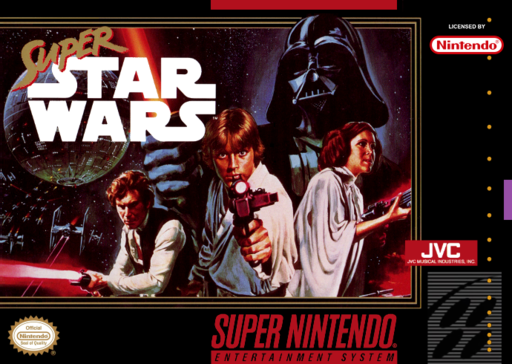
Super Star Wars box art

💡 Super Star Wars — Key Facts

  • Super Star Wars was developed by Sculptured Software and published by JVC
  • Released in 1992 on SNES
  • Genre: Action, Platformer
  • We rate it 8.8/10 — highly recommended
  • JVC's 1992 SNES action-platformer and one of the finest licensed games of the 16-bit era — Super Star Wars faithfully adapts Episode IV: A New Hope through side-scrolling action stages, Mode 7 vehicle sequences (landspeeder, X-Wing, Millennium Falcon), three playable characters (Luke, Han, Chewbacca), and notoriously difficult combat that tested player patience alongside its exceptional Star Wars atmosphere.

Overview

The Main Theme plays. Luke Skywalker appears on Tatooine. The landspeeder is ready.

Super Star Wars delivered the Star Wars experience in 1992 at a fidelity that SNES hardware permitted — faithful enough to feel like the film, different enough to be its own demanding game.

The Difficulty

Jedi mode. The difficulty setting named after the highest achievement in the IP’s mythology, earned by completing a game that tested player patience at every setting.

Super Star Wars on Medium is difficult. On Jedi, it’s demanding in ways that aren’t immediately apparent — not cheap deaths from invisible obstacles, but requiring the kind of pattern mastery that fighting game players develop for boss encounters. Each stage’s enemy configurations, projectile timing, and platform sequences become known through repetition until they’re executable.

The difficulty was its own endorsement. Players who completed Super Star Wars on Jedi mode mentioned it. The game created a specific community context: the SNES Star Wars trilogy wasn’t for casual encounters. The reputation persisted.

The Mode 7

Tatooine’s surface from above. The horizon scaling as the landspeeder moved forward — the same hardware trick that F-Zero had demonstrated as a racing perspective, applied to Star Wars’ desert planet.

The X-Wing trench run was the showcase: the Death Star’s exhaust port corridor, TIE Fighters, the torpedo shot at the end. Mode 7 couldn’t replicate the film’s camera movement, but it could replicate the franchise’s most recognizable sequence in a form playable with a SNES controller.

The vehicle sequences weren’t diversions from the main game. They were demonstrations that the SNES could participate in the Star Wars experience at multiple visual registers simultaneously — side-scrolling action, overhead racing, behind-ship dogfighting.

The Three

Luke’s lightsaber deflects blaster shots. A specific detail that the game preserved from the film’s visual language and built into the mechanical distinction between characters.

Han fires from the hip. Chewbacca’s bowcaster hits harder. The character distinctions weren’t cosmetic — the optimal character for each stage section rewarded attention to what each one did differently rather than defaulting to Luke throughout.

The Star Wars license in 1992 didn’t guarantee a good game. JVC and Sculptured Software built one alongside it.

Our Review

8.8
Excellent / 10
🎮
Gameplay
★★★★★
🎨
Graphics
★★★★★
🎵
Audio
★★★★★
🔄
Replay
★★★★★

Gameplay

Super Star Wars is an action platformer adapting Star Wars: Episode IV following Luke Skywalker, Han Solo, and Chewbacca through the film's key locations. Each character has distinct abilities: Luke has a lightsaber and uses the Force, Han fires his blaster, Chewbacca uses a bowcaster. On-foot stages feature enemy shooting, platformer jumps, and environmental hazards. Mode 7 vehicle sequences provide landspeeder, Millennium Falcon, and X-Wing missions. Nine levels progress from Tatooine's desert through the Mos Eisley Cantina, Millennium Falcon dogfights, and the Death Star. Weapon upgrades from enemies improve firepower across all characters. The game is notoriously difficult — multiple stages have demanding enemy patterns and limited checkpoints.

Graphics

Super Star Wars showcases SNES Mode 7 for its vehicle sequences — the landspeeder over Tatooine's surface, the X-Wing Death Star trench run — alongside detailed sprite work for the film's characters and environments. The Death Star's corridors and Tatooine's dunes are faithfully rendered.

Audio

John Williams' Star Wars score faithfully adapted for SNES hardware — the Main Theme, Imperial March, Cantina Band, and battle compositions performed in SNES audio are among the most recognizable licensed music translations in retro gaming.

Replayability

Difficulty level — Easy, Medium, Jedi — provides three distinct challenge settings. Jedi difficulty is considered one of SNES's hardest settings. Character selection and weapon upgrade optimization provide secondary engagement. The game's reputation for difficulty creates replay motivation around improvement.

Historical Significance

Super Star Wars (1992) is the most successful of JVC's three SNES Star Wars games and one of the most commercially successful SNES licensed titles. Its quality and fidelity to the film's atmosphere set the standard for what Star Wars games could achieve on home hardware. Super Star Wars, Super Empire Strikes Back (1993), and Super Return of the Jedi (1994) form a trilogy of SNES licensed games that are collectively considered among the finest licensed adaptations in gaming history. The Mode 7 vehicle sequences demonstrated SNES hardware capabilities to an audience already familiar with the Star Wars IP.

Pros

  • + John Williams score faithfully adapted in SNES audio
  • + Three playable characters with distinct combat styles
  • + Mode 7 vehicle sequences — landspeeder, X-Wing trench run
  • + Faithful Episode IV atmosphere and location progression
  • + Three difficulty settings including punishing Jedi mode

Cons

  • - Notoriously difficult even on Medium — significant frustration potential
  • - Limited checkpoints in demanding stages
  • - Some stage designs feel trial-and-error at first encounter
  • - Tatooine desert stages can feel repetitive in structure

Also Known As

Super Star Wars SNESスーパースターウォーズ

Super Star Wars FAQ

How do the three playable characters differ in Super Star Wars?
Super Star Wars' three playable characters — Luke Skywalker, Han Solo, and Chewbacca — each have distinct combat tools that make certain stage sections suit different characters. Luke uses a lightsaber for melee combat and eventually gains Force powers; his lightsaber deflects enemy blaster shots, making him effective against certain enemy types. He's the default protagonist for most of the campaign. Han Solo uses his blaster pistol from hip as ranged combat — a gunfighter who can engage from distance without the melee commitment Luke's saber requires. Chewbacca uses a bowcaster — a bow-style energy weapon — with higher individual shot power but different fire rate than Han's pistol. Each character also has different platformer movement properties. Luke is the most balanced; Han's ranged focus suits open-area sections; Chewbacca's power is useful against tougher enemies.
What are the Mode 7 vehicle sequences in Super Star Wars?
Super Star Wars features three Mode 7 vehicle stages that use the SNES's hardware scaling and rotation to create pseudo-3D movement effects. The landspeeder sequence has Luke driving across Tatooine's surface toward Mos Eisley, with the desert terrain scaling below and enemies approaching from the horizon. The Millennium Falcon sequence places the player in a space dogfight shooting TIE Fighters from a behind-the-ship perspective with space scrolling past. The Death Star trench run — the film's climactic X-Wing mission — is a corridor-flying sequence toward the exhaust port, avoiding obstacles and firing at the target. Mode 7 was the SNES's primary technical showcase in 1992; Super Star Wars used it for sequences that matched the Star Wars IP's most visually iconic moments, making the game a demonstration of both SNES capabilities and Star Wars atmosphere simultaneously.
How difficult is Super Star Wars and what are the difficulty settings?
Super Star Wars is considered one of the most difficult licensed SNES games, with a reputation that persists in retro gaming discussion. The game offers three difficulty settings: Easy, Medium, and Jedi. Even Medium difficulty is demanding by contemporary standards — enemy fire rates, platform timing requirements, and limited checkpoints create situations where players may attempt specific stages dozens of times. Jedi difficulty is genuinely punishing and is considered one of SNES's hardest settings by players who've completed it. The difficulty is not considered unfair but rather demands pattern memorization and precise execution consistent with the harder action games of the era. New players are typically advised to begin on Easy — the game's reputation for difficulty emerged partly from players encountering it on Medium or Jedi first and not realizing easier settings existed.
Is Super Star Wars available on modern platforms?
Super Star Wars is available on Nintendo Switch Online's SNES library for Nintendo Switch Online subscribers. The game was also released on Wii Virtual Console and PS4/PS Vita in 2015. Disney (which acquired Lucasfilm and the Star Wars license) has maintained digital availability of the JVC Star Wars SNES trilogy on modern platforms. Physical SNES cartridges are available in retro game markets. Super Empire Strikes Back (1993) and Super Return of the Jedi (1994) are the sequel trilogy entries with similar gameplay and comparable difficulty. The three SNES Star Wars games together represent the JVC-developed 16-bit Star Wars era before the franchise shifted to LucasArts' own direct development.

Related Games

Games Like This →