Castlevania Chronicles

Reviewed by Marcus Webb & Elena Castillo ·

Konami's 2001 PS1 package and the Western debut of the Sharp X68000 Castlevania — Castlevania Chronicles includes the 1993 X68000 computer original plus a redrawn 'Arranged Mode' with enhanced graphics and Simon Belmont with updated sprites, providing the most faithfully arcade-accurate classic Castlevania port alongside the most demanding difficulty of any entry in the franchise.
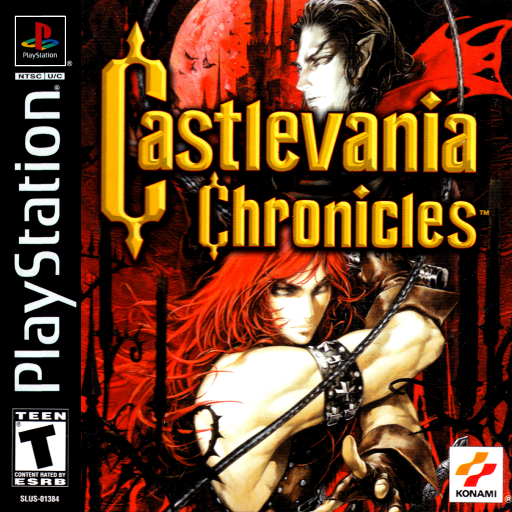
Castlevania Chronicles box art

💡 Castlevania Chronicles — Key Facts

  • Castlevania Chronicles was developed by Konami and published by Konami
  • Released in 2001 on PLAYSTATION
  • Genre: Action, Platformer
  • We rate it 8.4/10 — highly recommended
  • Konami's 2001 PS1 package and the Western debut of the Sharp X68000 Castlevania — Castlevania Chronicles includes the 1993 X68000 computer original plus a redrawn 'Arranged Mode' with enhanced graphics and Simon Belmont with updated sprites, providing the most faithfully arcade-accurate classic Castlevania port alongside the most demanding difficulty of any entry in the franchise.

Overview

Sharp X68000. A Japanese personal computer with hardware beyond the NES — capable of arcade-quality graphics and FM synthesis audio. In 1993, Konami built a Castlevania for it that showed what the franchise could look like without console limitations.

Western players couldn’t play it. The X68000 was Japan-only and expensive.

Eight years later, Castlevania Chronicles brought it to PS1.

The X68000 Version

The NES Castlevania had sprites appropriate to its hardware: small, readable, limited in color. The X68000 Castlevania had sprites that looked like they belonged in an arcade cabinet from 1993.

The difference was visible in the first screen. Simon Belmont’s whip animation had more frames. The castle’s stone floor had texture that the NES version’s hardware couldn’t render. The enemies moved with animation quality that made the NES originals look approximate.

The sound was the larger gap. FM synthesis audio — the X68000’s sound hardware working at its capability — produced ‘Bloody Tears’ and ‘Vampire Killer’ at a quality that the NES’s sound chip couldn’t approach. Konami’s composers’ arrangements for the original game had always been exceptional; the X68000 version was the first time Western players could hear them without NES hardware compression.

The Difficulty

The X68000 version was harder. Not in vague terms — specifically, measurably harder in enemy placement and aggression.

Medusa Heads appear more frequently. Enemies attack from positions that give less reaction time. Stages that the NES version made navigable with careful play become hazardous even with prior knowledge. The X68000 Castlevania was made for a platform audience who prided the system on its capability — the game matched that capability with challenge to suit.

The Two Modes

Original: the 1993 experience, FM synthesis, the historical artifact.

Arranged: redrawn sprites, Simon updated, reorchestrated soundtrack, adjusted difficulty. The question of which to play depends on what’s being sought: the X68000 game as it existed, or a modern update that retains the game’s structure with visual polish.

Both are present. Castlevania Chronicles is a package — it doesn’t make a choice. That choice belongs to the player.

Our Review

8.4
Excellent / 10
🎮
Gameplay
★★★★★
🎨
Graphics
★★★★★
🎵
Audio
★★★★★
🔄
Replay
★★★★★

Gameplay

Castlevania Chronicles is a package containing two versions of the same game. Original Mode: the 1993 Sharp X68000 computer version of Castlevania — a remarkably faithful arcade recreation of the NES original with enhanced graphics and sound, extremely difficult by modern standards. Arranged Mode: an updated version with redrawn 2D graphics, newly illustrated Simon Belmont sprite, reorchestrated soundtrack, and some gameplay adjustments. Both versions follow Simon Belmont through Dracula's castle — eight stages of whip-based combat, staircase-climbing, and classic Castlevania subweapons (Holy Water, Axe, Cross, Boomerang, Stopwatch, Knife). The X68000 original is known for extreme difficulty, particularly its early stages.

Graphics

The Original Mode preserves the X68000's distinctive art style — more detailed than the NES but less ornate than Super Castlevania IV's Mode 7 ambitions. The Arranged Mode redraws sprites and backgrounds with a slightly more modern 2D aesthetic while maintaining the classic visual language.

Audio

Castlevania Chronicles includes the X68000's FM synthesis soundtrack — which many fans consider among the series' finest compositions — alongside the Arranged Mode's reorchestrated versions of the same tracks. The original FM sound is particularly praised for 'Bloody Tears' and 'Vampire Killer.'

Replayability

Two separate modes providing distinct visual and audio experiences, the Original Mode's extreme difficulty creating replay through survival improvement, and the Arranged Mode's adjusted balance for different completion goals provide dual-path replay.

Historical Significance

Castlevania Chronicles (PS1, 2001) was the Western debut of the Sharp X68000 Castlevania — a 1993 Japanese computer game that was unavailable in the West for eight years. The X68000 version was significant because it represented what Castlevania could look like without NES hardware limitations: the graphics and sound quality were substantially higher. The PS1 package made this version of Castlevania's origin story accessible to Western players. The Arranged Mode provided a more modern visual update that demonstrated how the classic formula could look with additional resources. Castlevania Chronicles represents the classic Castlevania design in its most demanding and visually accomplished pre-Symphony form.

Pros

  • + Western debut of the acclaimed X68000 Castlevania
  • + Two complete modes — Original and Arranged with distinct presentations
  • + FM synthesis soundtrack considered among series' finest
  • + Most demanding classic Castlevania challenge for skill-focused players
  • + Preservation of a Japan-exclusive computer game for Western players

Cons

  • - Original Mode's difficulty is extremely punishing even for Castlevania veterans
  • - No new content beyond the X68000 game and its Arranged revision
  • - PS1 loading may feel slightly long between attempts
  • - Overshadowed by Symphony of the Night in the PS1 Castlevania conversation

Also Known As

Castlevania Chronicles PS1X68000 Castlevania悪魔城ドラキュラ (X68000)

Castlevania Chronicles FAQ

What is the Sharp X68000 and why was a Castlevania made for it?
The Sharp X68000 was a Japanese personal computer manufactured from 1987 onward — a premium home computer with hardware capabilities significantly exceeding the NES and comparable to arcade hardware of its era. The X68000 was capable of producing graphics and sound quality that Nintendo home consoles couldn't match. Konami developed Castlevania for the X68000 in 1993 as a showcase for the computer's capabilities — the game featured higher-resolution sprites, more detailed backgrounds, and FM synthesis audio that far exceeded the NES Castlevania's hardware. The X68000 version was intended as the 'ideal' Castlevania visually — what the game would look like without NES limitations. The computer was expensive and Japan-only, limiting the game's audience to Japanese X68000 owners. Castlevania Chronicles PS1 (2001) was the first time Western players could officially access this version.
How difficult is the Original Mode in Castlevania Chronicles?
Castlevania Chronicles' Original Mode (the 1993 X68000 version) is considered among the most difficult entries in the classic Castlevania series. The game uses the same stage-by-stage whip-combat structure as the original NES Castlevania but with significantly more aggressive enemy placements, faster enemy attacks, and less forgiving hit reactions than the NES version. Medusa Heads — the notorious enemy from NES Castlevania that can knock Simon off platforms — appear more frequently and in more aggressive patterns. Bosses have complex attack patterns that require precise positioning and timing. Deaths return the player to the beginning of the stage (no mid-stage saves). Many players familiar with other Castlevania titles find the Original Mode substantially harder than what they're accustomed to, including Super Castlevania IV which is typically considered more accessible. The Arranged Mode adjusts some of these difficulty factors for a less punishing experience.
What is the Arranged Mode and how does it differ?
The Arranged Mode in Castlevania Chronicles is an updated version of the X68000 game with redrawn 2D graphics and a reorchestrated soundtrack. The core gameplay — Simon Belmont, Dracula's castle, eight stages, whip and subweapons — remains the same structure as the Original Mode. The visual changes include newly drawn character sprites for Simon that give him a more modern appearance than the X68000 original, redrawn enemy designs, and updated background art that maintains the classic Castlevania visual language with more detail. The soundtrack receives a reorchestration of the same compositions from higher-quality audio samples. Some gameplay adjustments make the Arranged Mode slightly less punishing than the Original, though it remains a challenging classic Castlevania experience. For players who want the authentic X68000 experience, Original Mode is the historically accurate version; for players who prefer modern visual quality, Arranged Mode provides the update.
Is Castlevania Chronicles available on modern platforms?
Castlevania Chronicles was available on PlayStation Network as a PS1 Classic for PS3 and PSP, but the PS1 Classics digital store has since been discontinued for new purchases on those platforms. The physical PS1 disc is available in retro game markets. No current-generation digital storefront officially carries Castlevania Chronicles. The Castlevania Anniversary Collection (Konami, 2019) includes Castlevania, Simon's Quest, Dracula's Curse, Super Castlevania IV, Castlevania: The Adventure, Belmont's Revenge, Castlevania II Belmont's Revenge, and Kid Dracula — but not Castlevania Chronicles. The X68000 original specifically remains outside modern digital availability. Physical PS1 disc and emulation are the primary modern access routes.

Related Games

Games Like This →